# SAM
## 概述
SAM (Segment Anything Model)由 Alexander Kirillov、Eric Mintun、Nikhila Ravi、Hanzi Mao、Chloe Rolland、Laura Gustafson、Tete Xiao、Spencer Whitehead、Alex Berg、Wan-Yen Lo、Piotr Dollar 和 Ross Girshick 在 [Segment Anything](https://huggingface.co/papers/2304.02643) 中提出。
给定一张输入图像,该模型可用于预测任意感兴趣对象的分割掩码。
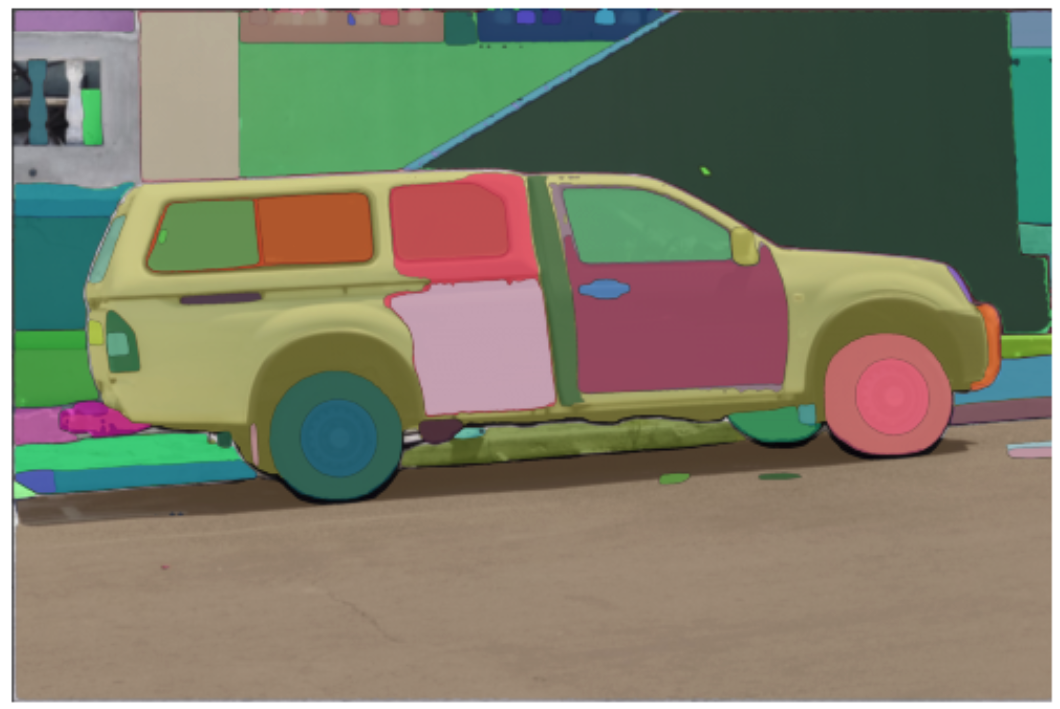
该论文的摘要如下:
*我们推出了 Segment Anything(SA)项目:一个用于图像分割的新任务、新模型和新数据集。利用我们的高效模型进行数据收集循环,我们构建了迄今为止规模最大的分割数据集(远超以往),包含超过 10 亿个掩码,覆盖 1100 万张具有授权且尊重隐私的图像。该模型经过专门设计和训练,支持提示(promptable),因此可以零样本迁移到新的图像分布和任务中。我们在众多任务上评估了其能力,发现其零样本性能令人印象深刻——通常与以往的完全监督结果相当,甚至更优。我们在 [https://segment-anything.com](https://segment-anything.com) 发布了 Segment Anything Model(SAM)以及包含 10 亿个掩码和 1100 万张图像的数据集(SA-1B),以促进计算机视觉基础模型的研究。*
提示:
- 该模型预测二值掩码,用于指示给定图像中目标对象是否存在。
- 如果提供 2D 输入点和/或输入边界框,模型的预测结果会好得多
- 您可以为同一图像提示多个点,并预测单个掩码。
- 目前尚不支持微调模型
- 根据论文,文本输入也应得到支持。然而,截至本文撰写之时,[官方仓库](https://github.com/facebookresearch/segment-anything/issues/4#issuecomment-1497626844)似乎尚未支持该功能。
该模型由 [ybelkada](https://huggingface.co/ybelkada) 和 [ArthurZ](https://huggingface.co/ArthurZ) 贡献。原始代码可在[此处](https://github.com/facebookresearch/segment-anything)找到。
以下示例展示了如何根据图像和 2D 点运行掩码生成:
```python
import requests
import torch
from PIL import Image
from transformers import SamModel, SamProcessor
model = SamModel.from_pretrained("facebook/sam-vit-huge", device_map="auto")
processor = SamProcessor.from_pretrained("facebook/sam-vit-huge")
img_url = "https://huggingface.co/ybelkada/segment-anything/resolve/main/assets/car.png"
raw_image = Image.open(requests.get(img_url, stream=True).raw).convert("RGB")
input_points = [[[450, 600]]] # 2D location of a window in the image
inputs = processor(raw_image, input_points=input_points, return_tensors="pt").to(model.device)
with torch.no_grad():
outputs = model(**inputs)
masks = processor.image_processor.post_process_masks(
outputs.pred_masks.cpu(), inputs["original_sizes"].cpu(), inputs["reshaped_input_sizes"].cpu()
)
scores = outputs.iou_scores
```
您也可以在处理器中同时处理输入图像和自定义掩码,并将其传递给模型。
```python
import requests
import torch
from PIL import Image
from transformers import SamModel, SamProcessor
model = SamModel.from_pretrained("facebook/sam-vit-huge", device_map="auto")
processor = SamProcessor.from_pretrained("facebook/sam-vit-huge")
img_url = "https://huggingface.co/ybelkada/segment-anything/resolve/main/assets/car.png"
raw_image = Image.open(requests.get(img_url, stream=True).raw).convert("RGB")
mask_url = "https://huggingface.co/ybelkada/segment-anything/resolve/main/assets/car.png"
segmentation_map = Image.open(requests.get(mask_url, stream=True).raw).convert("1")
input_points = [[[450, 600]]] # 2D location of a window in the image
inputs = processor(raw_image, input_points=input_points, segmentation_maps=segmentation_map, return_tensors="pt").to(model.device)
with torch.no_grad():
outputs = model(**inputs)
masks = processor.image_processor.post_process_masks(
outputs.pred_masks.cpu(), inputs["original_sizes"].cpu(), inputs["reshaped_input_sizes"].cpu()
)
scores = outputs.iou_scores
```
## 资源
一份来自 Hugging Face 官方和社区(以 🌎 标识)的资源列表,帮助你快速上手 SAM。
- 用于使用该模型的[演示笔记本](https://github.com/huggingface/notebooks/blob/main/examples/segment_anything.ipynb)。
- 用于自动掩码生成流水线的[演示笔记本](https://github.com/huggingface/notebooks/blob/main/examples/automatic_mask_generation.ipynb)。
- 用于 MedSAM 推理的[演示笔记本](https://github.com/NielsRogge/Transformers-Tutorials/blob/master/SAM/Run_inference_with_MedSAM_using_HuggingFace_Transformers.ipynb),MedSAM 是 SAM 在医疗领域的微调版本。🌎
- 用于在自定义数据上微调模型的[演示笔记本](https://github.com/NielsRogge/Transformers-Tutorials/blob/master/SAM/Fine_tune_SAM_(segment_anything)_on_a_custom_dataset.ipynb)。🌎
## SlimSAM
SlimSAM 是 SAM 的剪枝版本,由 Zigeng Chen 等人在 [0.1% Data Makes Segment Anything Slim](https://huggingface.co/papers/2312.05284) 中提出。SlimSAM 在保持相同性能的同时,大幅减小了 SAM 模型的体积。
可以在 [hub](https://huggingface.co/models?other=slimsam) 上找到检查点,它们可以作为 SAM 的直接替代品使用。
## Grounded SAM
可以将 [Grounding DINO](grounding-dino) 与 SAM 结合,实现基于文本的掩码生成,如 [Grounded SAM: Assembling Open-World Models for Diverse Visual Tasks](https://huggingface.co/papers/2401.14159) 中所述。有关详细信息,请参阅此 [演示笔记本](https://github.com/NielsRogge/Transformers-Tutorials/blob/master/Grounding%20DINO/GroundingDINO_with_Segment_Anything.ipynb) 🌍。
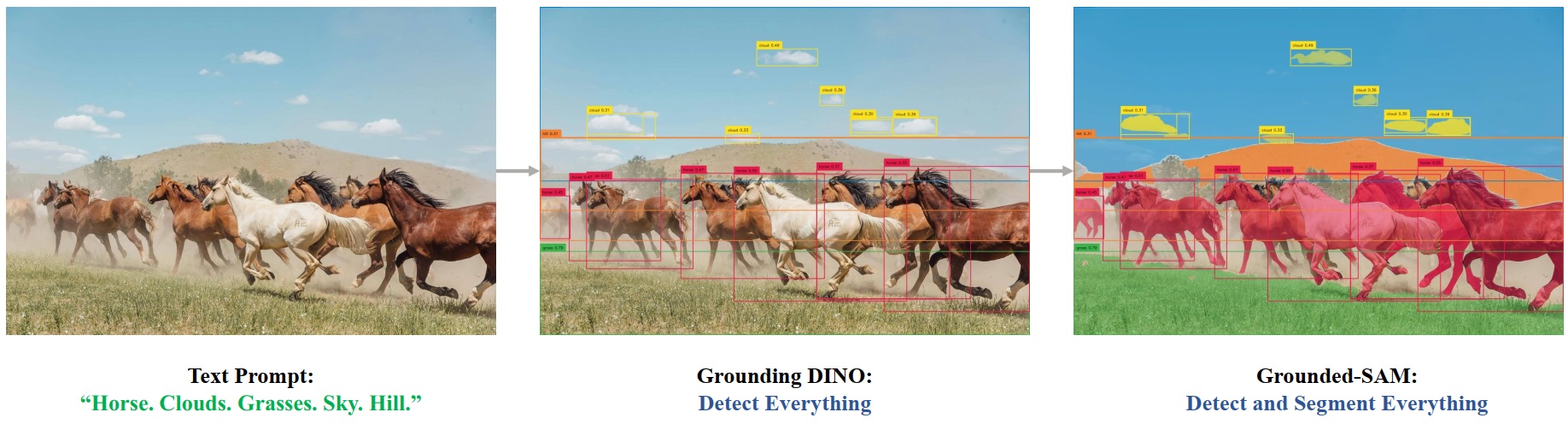 Grounded SAM 概览。摘自原始仓库。
## SamConfig[[transformers.SamConfig]]
#### transformers.SamConfig[[transformers.SamConfig]]
```python
transformers.SamConfig(transformers_version: str | None = None, architectures: list[str] | None = None, output_hidden_states: bool | None = False, return_dict: bool | None = True, dtype: str | torch.dtype | None = None, chunk_size_feed_forward: int = 0, is_encoder_decoder: bool = False, id2label: dict[int, str] | dict[str, str] | None = None, label2id: dict[str, int] | dict[str, str] | None = None, problem_type: Literal['regression', 'single_label_classification', 'multi_label_classification'] | None = None, vision_config: dict | transformers.configuration_utils.PreTrainedConfig | None = None, prompt_encoder_config: dict | transformers.configuration_utils.PreTrainedConfig | None = None, mask_decoder_config: dict | transformers.configuration_utils.PreTrainedConfig | None = None, initializer_range: float = 0.02, tie_word_embeddings: bool = True)
```
[来源](https://github.com/huggingface/transformers/blob/main/src/transformers/models/sam/configuration_sam.py#L146)
**参数:**
vision_config (`Union[dict, ~configuration_utils.PreTrainedConfig]`,*可选*):视觉骨干网络的配置对象或字典。
prompt_encoder_config (Union[`dict`, `SamPromptEncoderConfig`], *可选*) : 用于初始化 [SamPromptEncoderConfig](/docs/transformers/main/zh/model_doc/sam#transformers.SamPromptEncoderConfig) 的配置选项字典。
mask_decoder_config (Union[`dict`, `SamMaskDecoderConfig`], *可选*) : 用于初始化 [SamMaskDecoderConfig](/docs/transformers/main/zh/model_doc/sam#transformers.SamMaskDecoderConfig) 的配置选项字典。
initializer_range (`float`,*可选*,默认值为 `0.02`):用于初始化所有权重矩阵的 truncated_normal_initializer 的标准差。
tie_word_embeddings (`bool`,*可选*,默认为 `True`):是否根据模型的 `tied_weights_keys` 映射来绑定权重嵌入。
这是用于存储 SamModel 配置的类。它根据指定的参数实例化 Sam 模型,并定义模型架构。使用默认值实例化配置将生成与 [facebook/sam-vit-huge](https://huggingface.co/facebook/sam-vit-huge) 类似的配置。
配置对象继承自 [PreTrainedConfig](/docs/transformers/main/zh/main_classes/configuration#transformers.PreTrainedConfig),可用于控制模型输出。有关更多信息,请参阅 [PreTrainedConfig](/docs/transformers/main/zh/main_classes/configuration#transformers.PreTrainedConfig) 的文档。
示例:
```python
>>> from transformers import (
... SamVisionConfig,
... SamPromptEncoderConfig,
... SamMaskDecoderConfig,
... SamModel,
... )
>>> # Initializing a SamConfig with `"facebook/sam-vit-huge"` style configuration
>>> configuration = SamConfig()
>>> # Initializing a SamModel (with random weights) from the `"facebook/sam-vit-huge"` style configuration
>>> model = SamModel(configuration)
>>> # Accessing the model configuration
>>> configuration = model.config
>>> # We can also initialize a SamConfig from a SamVisionConfig, SamPromptEncoderConfig, and SamMaskDecoderConfig
>>> # Initializing SAM vision, SAM Q-Former and language model configurations
>>> vision_config = SamVisionConfig()
>>> prompt_encoder_config = SamPromptEncoderConfig()
>>> mask_decoder_config = SamMaskDecoderConfig()
>>> config = SamConfig(vision_config, prompt_encoder_config, mask_decoder_config)
```
## SamVisionConfig[[transformers.SamVisionConfig]]
#### transformers.SamVisionConfig[[transformers.SamVisionConfig]]
```python
transformers.SamVisionConfig(transformers_version: str | None = None, architectures: list[str] | None = None, output_hidden_states: bool | None = False, return_dict: bool | None = True, dtype: str | torch.dtype | None = None, chunk_size_feed_forward: int = 0, is_encoder_decoder: bool = False, id2label: dict[int, str] | dict[str, str] | None = None, label2id: dict[str, int] | dict[str, str] | None = None, problem_type: Literal['regression', 'single_label_classification', 'multi_label_classification'] | None = None, hidden_size: int = 768, output_channels: int = 256, num_hidden_layers: int = 12, num_attention_heads: int = 12, num_channels: int = 3, image_size: int | list[int] | tuple[int, int] = 1024, patch_size: int | list[int] | tuple[int, int] = 16, hidden_act: str = 'gelu', layer_norm_eps: float = 1e-06, attention_dropout: float | int = 0.0, initializer_range: float = 1e-10, qkv_bias: bool = True, mlp_ratio: float = 4.0, use_abs_pos: bool = True, use_rel_pos: bool = True, window_size: int = 14, global_attn_indexes: list[int] | tuple[int, ...] = (2, 5, 8, 11), num_pos_feats: int = 128, mlp_dim: int | None = None)
```
[来源](https://github.com/huggingface/transformers/blob/main/src/transformers/models/sam/configuration_sam.py#L81)
**参数:**
hidden_size (`int`,*可选*,默认为 `768`):隐藏表示的维度。
output_channels (`int`,*可选*,默认为 256):Patch Encoder 中输出通道的维度。
num_hidden_layers (`int`,*可选*,默认为 `12`):Transformer 解码器中的隐藏层数。
num_attention_heads (`int`,*可选*,默认为 `12`):Transformer 解码器中每个注意力层的注意力头数量。
num_channels (`int`,*可选*,默认为 `3`):输入通道数。
image_size (`Union[int, list[int], tuple[int, int]]`,*可选*,默认为 `1024`):每张图片的尺寸(分辨率)。
patch_size (`Union[int, list[int], tuple[int, int]]`,*可选*,默认为 `16`):每个 patch 的大小(分辨率)。
hidden_act (`str`,*可选*,默认为 `gelu`):解码器中的非线性激活函数(函数或字符串)。例如,`"gelu"`、`"relu"`、`"silu"` 等。
layer_norm_eps (`float`, *可选*, 默认为 `1e-06`) : 层归一化层使用的 epsilon。
attention_dropout (`Union[float, int]`,*可选*,默认值为 `0.0`):注意力概率的 dropout 比率。
initializer_range (`float`, *可选*, 默认为 `1e-10`) : 用于初始化所有权重矩阵的 truncated_normal_initializer 的标准差。
qkv_bias (`bool`,*可选*,默认为 `True`):是否向查询、键和值添加偏置。
mlp_ratio (`float`, *可选*, 默认为 `4.0`) : MLP 隐藏维度与嵌入维度的比率。
use_abs_pos (`bool`,*可选*,默认为 `True`):是否使用绝对位置嵌入。
use_rel_pos (`bool`,*可选*,默认为 `True`):是否使用相对位置嵌入。
window_size (`int`,*可选*,默认为 14):相对位置的窗口大小。
global_attn_indexes (`list[int]`,*可选*,默认为 `[2, 5, 8, 11]`):全局注意力层的索引。
num_pos_feats (`int`,*可选*,默认为 128):位置嵌入的维度。
mlp_dim (`int`, *可选*) : Transformer 编码器中 MLP 层的维度。如果为 `None`,则默认为 `mlp_ratio * hidden_size`。
这是用于存储 SamModel 配置的类。它根据指定的参数实例化 Sam 模型,并定义模型架构。使用默认值实例化配置将生成与 [facebook/sam-vit-huge](https://huggingface.co/facebook/sam-vit-huge) 类似的配置。
配置对象继承自 [PreTrainedConfig](/docs/transformers/main/zh/main_classes/configuration#transformers.PreTrainedConfig),可用于控制模型输出。有关更多信息,请参阅 [PreTrainedConfig](/docs/transformers/main/zh/main_classes/configuration#transformers.PreTrainedConfig) 的文档。
示例:
```python
>>> from transformers import (
... SamVisionConfig,
... SamVisionModel,
... )
>>> # Initializing a SamVisionConfig with `"facebook/sam-vit-huge"` style configuration
>>> configuration = SamVisionConfig()
>>> # Initializing a SamVisionModel (with random weights) from the `"facebook/sam-vit-huge"` style configuration
>>> model = SamVisionModel(configuration)
>>> # Accessing the model configuration
>>> configuration = model.config
```
## SamMaskDecoderConfig[[transformers.SamMaskDecoderConfig]]
#### transformers.SamMaskDecoderConfig[[transformers.SamMaskDecoderConfig]]
```python
transformers.SamMaskDecoderConfig(transformers_version: str | None = None, architectures: list[str] | None = None, output_hidden_states: bool | None = False, return_dict: bool | None = True, dtype: str | torch.dtype | None = None, chunk_size_feed_forward: int = 0, is_encoder_decoder: bool = False, id2label: dict[int, str] | dict[str, str] | None = None, label2id: dict[str, int] | dict[str, str] | None = None, problem_type: Literal['regression', 'single_label_classification', 'multi_label_classification'] | None = None, hidden_size: int = 256, hidden_act: str = 'relu', mlp_dim: int = 2048, num_hidden_layers: int = 2, num_attention_heads: int = 8, attention_downsample_rate: int = 2, num_multimask_outputs: int = 3, iou_head_depth: int = 3, iou_head_hidden_dim: int = 256, layer_norm_eps: float = 1e-06)
```
[来源](https://github.com/huggingface/transformers/blob/main/src/transformers/models/sam/configuration_sam.py#L50)
**参数:**
hidden_size (`int`,*可选*,默认为 `256`):隐藏表示的维度。
hidden_act (`str`,*可选*,默认为 `relu`):解码器中的非线性激活函数(函数或字符串)。例如,`"gelu"`、`"relu"`、`"silu"` 等。
mlp_dim (`int`,*可选*,默认为 2048):Transformer 编码器中“中间”(即前馈)层的维度。
num_hidden_layers (`int`,*可选*,默认为 `2`):Transformer 解码器中的隐藏层数。
num_attention_heads (`int`,*可选*,默认为 `8`):Transformer 解码器中每个注意力层的注意力头数量。
attention_downsample_rate (`int`,*可选*,默认为 2):注意力层的下采样率。
num_multimask_outputs (`int`,*可选*,默认为 3):`SamMaskDecoder` 模块的输出数量。在 Segment Anything 论文中,该值被设置为 3。
iou_head_depth (`int`,*可选*,默认为 3):IoU 头模块中的层数。
iou_head_hidden_dim (`int`,*可选*,默认为 256):IoU 头模块中隐藏状态的维度。
layer_norm_eps (`float`, *可选*, 默认为 `1e-06`) : 层归一化层使用的 epsilon。
这是用于存储 SamModel 配置的类。它根据指定的参数实例化 Sam 模型,并定义模型架构。使用默认值实例化配置将生成与 [facebook/sam-vit-huge](https://huggingface.co/facebook/sam-vit-huge) 类似的配置。
配置对象继承自 [PreTrainedConfig](/docs/transformers/main/zh/main_classes/configuration#transformers.PreTrainedConfig),可用于控制模型输出。有关更多信息,请参阅 [PreTrainedConfig](/docs/transformers/main/zh/main_classes/configuration#transformers.PreTrainedConfig) 的文档。
## SamPromptEncoderConfig[[transformers.SamPromptEncoderConfig]]
#### transformers.SamPromptEncoderConfig[[transformers.SamPromptEncoderConfig]]
```python
transformers.SamPromptEncoderConfig(transformers_version: str | None = None, architectures: list[str] | None = None, output_hidden_states: bool | None = False, return_dict: bool | None = True, dtype: str | torch.dtype | None = None, chunk_size_feed_forward: int = 0, is_encoder_decoder: bool = False, id2label: dict[int, str] | dict[str, str] | None = None, label2id: dict[str, int] | dict[str, str] | None = None, problem_type: Literal['regression', 'single_label_classification', 'multi_label_classification'] | None = None, hidden_size: int = 256, image_size: int | list[int] | tuple[int, int] = 1024, patch_size: int | list[int] | tuple[int, int] = 16, mask_input_channels: int = 16, num_point_embeddings: int = 4, hidden_act: str = 'gelu', layer_norm_eps: float = 1e-06)
```
[来源](https://github.com/huggingface/transformers/blob/main/src/transformers/models/sam/configuration_sam.py#L24)
**参数:**
hidden_size (`int`,*可选*,默认为 `256`):隐藏表示的维度。
image_size (`Union[int, list[int], tuple[int, int]]`,*可选*,默认为 `1024`):每张图片的尺寸(分辨率)。
patch_size (`Union[int, list[int], tuple[int, int]]`,*可选*,默认为 `16`):每个 patch 的大小(分辨率)。
mask_input_channels (`int`,*可选*,默认为 16):输入到 `MaskDecoder` 模块的通道数。
num_point_embeddings (`int`,*可选*,默认为 4):要使用的点嵌入数量。
hidden_act (`str`,*可选*,默认为 `gelu`):解码器中的非线性激活函数(函数或字符串)。例如,`"gelu"`、`"relu"`、`"silu"` 等。
layer_norm_eps (`float`, *可选*, 默认为 `1e-06`) : 层归一化层使用的 epsilon。
这是用于存储 SamModel 配置的类。它根据指定的参数实例化 Sam 模型,并定义模型架构。使用默认值实例化配置将生成与 [facebook/sam-vit-huge](https://huggingface.co/facebook/sam-vit-huge) 类似的配置。
配置对象继承自 [PreTrainedConfig](/docs/transformers/main/zh/main_classes/configuration#transformers.PreTrainedConfig),可用于控制模型输出。有关更多信息,请参阅 [PreTrainedConfig](/docs/transformers/main/zh/main_classes/configuration#transformers.PreTrainedConfig) 的文档。
## SamProcessor[[transformers.SamProcessor]]
#### transformers.SamProcessor[[transformers.SamProcessor]]
```python
transformers.SamProcessor(image_processor)
```
[来源](https://github.com/huggingface/transformers/blob/main/src/transformers/models/sam/processing_sam.py#L82)
**参数:**
image_processor (`SamImageProcessor`):图像处理器是必需的输入。
构建一个 SamProcessor,将图像处理器封装为单一处理器。
[SamProcessor](/docs/transformers/main/zh/model_doc/sam#transformers.SamProcessor) 提供了 [SamImageProcessor](/docs/transformers/main/zh/model_doc/sam#transformers.SamImageProcessor) 的所有功能。有关更多信息,请参阅 [~SamImageProcessor](/docs/transformers/main/zh/model_doc/sam#transformers.SamImageProcessor)。
#### __调用__[[transformers.SamProcessor.__call__]]
```python
__call__(images: typing.Union[ForwardRef('PIL.Image.Image'), numpy.ndarray, ForwardRef('torch.Tensor'), list['PIL.Image.Image'], list[numpy.ndarray], list['torch.Tensor'], NoneType] = None, text: str | list[str] | list[list[str]] | None = None, **kwargs)
```
[来源](https://github.com/huggingface/transformers/blob/main/src/transformers/models/sam/processing_sam.py#L87)
**参数:**
images (`Union[PIL.Image.Image, numpy.ndarray, torch.Tensor, list[PIL.Image.Image], list[numpy.ndarray], list[torch.Tensor]]`, *可选*) : 要预处理的图像。期望输入单张图像或一批图像,其像素值范围为 0 到 255。如果传入的图像像素值在 0 到 1 之间,请设置 `do_rescale=False`。
text (`Union[str, list[str], list[list[str]]]`,*可选*):要编码的序列或序列批次。每个序列可以是字符串或字符串列表(预分词字符串)。如果传入预分词输入,请设置 `is_split_into_words=True` 以避免与批量输入产生歧义。
return_tensors (`str` 或 [TensorType](/docs/transformers/main/zh/internal/file_utils#transformers.TensorType),*可选*):如果设置,将返回特定框架的张量。可接受的值为: - `'pt'`:返回 PyTorch `torch.Tensor` 对象。 - `'np'`:返回 NumPy `np.ndarray` 对象。
**返回:** `~tokenization_utils_base.BatchEncoding`
- **data** (`dict`,*可选*) -- 由 `__call__`/`encode_plus`/`batch_encode_plus` 方法返回的列表/数组/张量字典('input_ids'、'attention_mask' 等)。
- **encoding**(`tokenizers.Encoding` 或 `Sequence[tokenizers.Encoding]`,*可选*)-- 如果分词器是快速分词器,并且会输出诸如从词/字符空间到 token 空间的映射等附加信息,则 `tokenizers.Encoding` 实例或实例列表(用于批次)将保存这些信息。
- **tensor_type** (`Union[None, str, TensorType]`,*可选*) -- 您可以在此处指定 tensor_type,以便在初始化时将 PyTorch/Numpy 张量中的整数列表进行转换。
- **prepend_batch_axis** (`bool`,*可选*,默认为 `False`) -- 在转换为张量时是否添加批次轴(参见上文中的 `tensor_type`)。请注意,仅当参数 `tensor_type` 被设置时,此参数才会生效,*否则无效*。
- **n_sequences** (`int`, *可选*) -- 每个编码所表示的输入序列数量(`None` 表示未知,`1` 表示单个序列,`2` 表示一对序列)。
## SamImageProcessor[[transformers.SamImageProcessor]]
#### transformers.SamImageProcessor[[transformers.SamImageProcessor]]
```python
transformers.SamImageProcessor(**kwargs: *)
```
[来源](https://github.com/huggingface/transformers/blob/main/src/transformers/models/sam/image_processing_sam.py#L61)
**参数:**
do_convert_rgb (`bool`,*kwargs*,*可选*,默认为 `True`):是否将图像转换为 RGB。
do_resize (`bool`, *kwargs*, *可选*, 默认为 `True`) : 是否调整图像大小。
size (`Annotated[int | list[int] | tuple[int, ...] | dict[str, int] | None, None]`, *kwargs*,默认为 `{'longest_edge' : 1024}`):描述输入到模型的最大尺寸。
default_to_square (`bool`,*kwargs*,*可选*,默认为 `True`):当 size 为整数时,是否在调整大小时默认使用正方形图像。
crop_size (`Annotated[int | list[int] | tuple[int, ...] | dict[str, int] | None, None]`, *kwargs*) : 应用 `center_crop` 后输出图像的尺寸。
resample (`Annotated[Union[int, PILImageResampling, NoneType], None]`, *kwargs*,默认为 `2`) : 如果调整图像大小,则使用的重采样滤波器。它可以是枚举 `PILImageResampling` 中的一个值。仅当 `do_resize` 设置为 `True` 时才会生效。
do_rescale (`bool`, *kwargs*, *可选*,默认为 `True`):是否对图像进行重新缩放。
rescale_factor (`float`, *kwargs*, *可选*,默认为 `0.00392156862745098`) : 当 `do_rescale` 设置为 `True` 时,用于对图像进行缩放的缩放因子。
do_normalize (`bool`,*kwargs*,*可选*,默认为 `True`):是否对图像进行归一化。
image_mean (`Union[float, list[float], tuple[float, ...]]`, *kwargs*, *可选*,默认为 `[0.485, 0.456, 0.406]`) : 用于归一化的图像均值。仅当 `do_normalize` 设置为 `True` 时生效。
image_std (`Union[float, list[float], tuple[float, ...]]`, *kwargs*, *可选*,默认为 `[0.229, 0.224, 0.225]`) : 用于归一化的图像标准差。仅当 `do_normalize` 设置为 `True` 时生效。
do_pad (`bool`, *kwargs*, *可选*,默认为 `True`) : 是否对图像进行填充。填充操作会将图像填充至批次中的最大尺寸,或填充至每张图像的固定正方形尺寸。具体的填充策略取决于模型。
pad_size (`Annotated[int | list[int] | tuple[int, ...] | dict[str, int] | None, None]`, *kwargs*,默认为 `{'height' : 1024, 'width': 1024}`):用于填充图像的 `{"height": int, "width" int}` 尺寸。必须大于为预处理提供的任何图像尺寸。如果未提供 `pad_size`,图像将被填充到批次中最大的高度和宽度。仅在 `do_pad=True.` 时应用。
do_center_crop (`bool`, *kwargs*, *可选*) : 是否对图像进行居中裁剪。
data_format (`Union[str, ~image_utils.ChannelDimension]`,*kwargs*,*可选*):仅支持 `ChannelDimension.FIRST`。为兼容旧版处理器而添加。
input_data_format (`Union[str, ~image_utils.ChannelDimension]`, *kwargs*, *可选*) : 输入图像的通道维度格式。如果未设置,则从输入图像中推断通道维度格式。可以是以下之一: - `"channels_first"` 或 `ChannelDimension.FIRST`:图像为 (num_channels, height, width) 格式。 - `"channels_last"` 或 `ChannelDimension.LAST`:图像为 (height, width, num_channels) 格式。 - `"none"` 或 `ChannelDimension.NONE`:图像为 (height, width) 格式。
device (`Annotated[Union[str, torch.device, NoneType], None]`, *kwargs*):用于处理视频的设备。如果未设置,则从输入视频中推断设备。
return_tensors (`Annotated[str | ~utils.generic.TensorType | None, None]`, *kwargs*) : 如果设置为 `'pt'`,则返回堆叠的张量,否则返回张量列表。
disable_grouping (`bool`, *kwargs*, *可选*) : 是否禁用按尺寸对图像进行分组,从而逐个处理图像而非批量处理。如果为 None,则当图像位于 CPU 上时设置为 True,否则设置为 False。此选择基于经验观察,详见此处:https://github.com/huggingface/transformers/pull/38157
image_seq_length (`int`, *kwargs*, *可选*) : 输入中每张图片所使用的图像 token 数量。为向后兼容而添加,但在未来的模型中,应将其设置为处理器的属性。
mask_size (`dict[str, *kwargs*, int]`, *可选*) : 用于将分割图调整大小的尺寸 `{"longest_edge": int}`。
mask_pad_size (`dict[str, *kwargs*, int]`, *可选*) : 用于填充分割图的尺寸 `{"height": int, "width": int}`。必须大于为预处理提供的任何分割图尺寸。
构建一个 SamImageProcessor 图像处理器。
#### preprocess[[transformers.SamImageProcessor.preprocess]]
```python
preprocess(images: typing.Union[ForwardRef('PIL.Image.Image'), numpy.ndarray, ForwardRef('torch.Tensor'), list['PIL.Image.Image'], list[numpy.ndarray], list['torch.Tensor']], segmentation_maps: typing.Union[ForwardRef('PIL.Image.Image'), numpy.ndarray, ForwardRef('torch.Tensor'), list['PIL.Image.Image'], list[numpy.ndarray], list['torch.Tensor'], NoneType] = None, **kwargs: *)
```
[来源](https://github.com/huggingface/transformers/blob/main/src/transformers/models/sam/image_processing_sam.py#L79)
**参数:**
images (`Union[PIL.Image.Image, numpy.ndarray, torch.Tensor, list[PIL.Image.Image], list[numpy.ndarray], list[torch.Tensor]]`) : 要预处理的图像。期望输入单张或一批像素值在 0 到 255 之间的图像。如果传入的图像像素值在 0 到 1 之间,请设置 `do_rescale=False`。
segmentation_maps (`ImageInput`,*可选*):要预处理的分割图。
do_convert_rgb (`bool`, *kwargs*, *可选*) : 是否将图像转换为 RGB。
do_resize (`bool`,*kwargs*,*可选*):是否调整图像大小。
size (`Annotated[int | list[int] | tuple[int, ...] | dict[str, int] | None, None]`, *kwargs*):描述模型的最大输入维度。
default_to_square (`bool`, *kwargs*, *可选*) : 当 size 为 int 时,是否在调整大小时默认使用正方形图像。
crop_size (`Annotated[int | list[int] | tuple[int, ...] | dict[str, int] | None, None]`, *kwargs*) : 应用 `center_crop` 后输出图像的尺寸。
resample (`Annotated[Union[int, PILImageResampling, NoneType], None]`, *kwargs*) : 如果调整图像大小,则使用的重采样滤波器。它可以是枚举 `PILImageResampling` 中的一个值。仅当 `do_resize` 设置为 `True` 时才会生效。
do_rescale (`bool`, *kwargs*, *可选*) : 是否对图像进行重新缩放。
rescale_factor (`float`, *kwargs*, *可选*) : 当 `do_rescale` 设置为 `True` 时,用于对图像进行缩放的缩放因子。
do_normalize (`bool`, *kwargs*, *可选*) : 是否对图像进行归一化。
image_mean (`Union[float, list[float], tuple[float, ...]]`,*kwargs*,*可选*):用于归一化的图像均值。仅当 `do_normalize` 设置为 `True` 时生效。
image_std (`Union[float, list[float], tuple[float, ...]]`, *kwargs*, *可选*) : 用于归一化的图像标准差。仅当 `do_normalize` 设置为 `True` 时生效。
do_pad (`bool`, *kwargs*, *可选*) : 是否对图像进行填充。填充操作会将图像填充至批次中的最大尺寸,或填充至每张图像的固定正方形尺寸。具体的填充策略取决于模型。
pad_size (`Annotated[int | list[int] | tuple[int, ...] | dict[str, int] | None, None]`, *kwargs*) : 用于将图像填充到的尺寸,格式为 `{"height": int, "width" int}`。该尺寸必须大于预处理中提供的任何图像尺寸。如果未提供 `pad_size`,图像将被填充到批次中最大的高度和宽度。仅在 `do_pad=True.` 时应用。
do_center_crop (`bool`, *kwargs*, *可选*) : 是否对图像进行居中裁剪。
data_format (`Union[str, ~image_utils.ChannelDimension]`,*kwargs*,*可选*):仅支持 `ChannelDimension.FIRST`。为兼容旧版处理器而添加。
input_data_format (`Union[str, ~image_utils.ChannelDimension]`, *kwargs*, *可选*) : 输入图像的通道维度格式。如果未设置,则从输入图像中推断通道维度格式。可以是以下之一: - `"channels_first"` 或 `ChannelDimension.FIRST`:图像为 (num_channels, height, width) 格式。 - `"channels_last"` 或 `ChannelDimension.LAST`:图像为 (height, width, num_channels) 格式。 - `"none"` 或 `ChannelDimension.NONE`:图像为 (height, width) 格式。
device (`Annotated[Union[str, torch.device, NoneType], None]`, *kwargs*):用于处理视频的设备。如果未设置,则从输入视频中推断设备。
return_tensors (`Annotated[str | ~utils.generic.TensorType | None, None]`, *kwargs*) : 如果设置为 `'pt'`,则返回堆叠的张量,否则返回张量列表。
disable_grouping (`bool`, *kwargs*, *可选*) : 是否禁用按尺寸对图像进行分组,从而逐个处理图像而非批量处理。如果为 None,则当图像位于 CPU 上时设置为 True,否则设置为 False。此选择基于经验观察,详见此处:https://github.com/huggingface/transformers/pull/38157
image_seq_length (`int`, *kwargs*, *可选*) : 输入中每张图片所使用的图像 token 数量。为向后兼容而添加,但在未来的模型中,应将其设置为处理器的属性。
mask_size (`dict[str, *kwargs*, int]`, *可选*) : 用于将分割图调整大小的尺寸 `{"longest_edge": int}`。
mask_pad_size (`dict[str, *kwargs*, int]`, *可选*) : 用于填充分割图的尺寸 `{"height": int, "width": int}`。必须大于为预处理提供的任何分割图尺寸。
**返回:** `~image_processing_base.BatchFeature`
- **data** (`dict`) -- 由 __call__ 方法返回的列表/数组/张量字典(例如 'pixel_values')。
- **tensor_type** (`Union[None, str, TensorType]`,*可选*) -- 您可以在此处指定 tensor_type,以便在初始化时将 PyTorch/Numpy 张量中的整数列表进行转换。
## SamImageProcessorPil[[transformers.SamImageProcessorPil]]
#### transformers.SamImageProcessorPil[[transformers.SamImageProcessorPil]]
```python
transformers.SamImageProcessorPil(**kwargs: *)
```
[来源](https://github.com/huggingface/transformers/blob/main/src/transformers/models/sam/image_processing_pil_sam.py#L82)
**参数:**
do_convert_rgb (`bool`,*kwargs*,*可选*,默认为 `True`):是否将图像转换为 RGB。
do_resize (`bool`, *kwargs*, *可选*, 默认为 `True`) : 是否调整图像大小。
size (`Annotated[int | list[int] | tuple[int, ...] | dict[str, int] | None, None]`, *kwargs*,默认为 `{'longest_edge' : 1024}`):描述输入到模型的最大尺寸。
default_to_square (`bool`,*kwargs*,*可选*,默认为 `True`):当 size 为整数时,是否在调整大小时默认使用正方形图像。
crop_size (`Annotated[int | list[int] | tuple[int, ...] | dict[str, int] | None, None]`, *kwargs*) : 应用 `center_crop` 后输出图像的尺寸。
resample (`Annotated[Union[int, PILImageResampling, NoneType], None]`, *kwargs*,默认为 `2`) : 如果调整图像大小,则使用的重采样滤波器。它可以是枚举 `PILImageResampling` 中的一个值。仅当 `do_resize` 设置为 `True` 时才会生效。
do_rescale (`bool`, *kwargs*, *可选*,默认为 `True`):是否对图像进行重新缩放。
rescale_factor (`float`, *kwargs*, *可选*,默认为 `0.00392156862745098`) : 当 `do_rescale` 设置为 `True` 时,用于对图像进行缩放的缩放因子。
do_normalize (`bool`,*kwargs*,*可选*,默认为 `True`):是否对图像进行归一化。
image_mean (`Union[float, list[float], tuple[float, ...]]`, *kwargs*, *可选*,默认为 `[0.485, 0.456, 0.406]`) : 用于归一化的图像均值。仅当 `do_normalize` 设置为 `True` 时生效。
image_std (`Union[float, list[float], tuple[float, ...]]`, *kwargs*, *可选*,默认为 `[0.229, 0.224, 0.225]`) : 用于归一化的图像标准差。仅当 `do_normalize` 设置为 `True` 时生效。
do_pad (`bool`, *kwargs*, *可选*,默认为 `True`) : 是否对图像进行填充。填充操作会将图像填充至批次中的最大尺寸,或填充至每张图像的固定正方形尺寸。具体的填充策略取决于模型。
pad_size (`Annotated[int | list[int] | tuple[int, ...] | dict[str, int] | None, None]`, *kwargs*,默认为 `{'height' : 1024, 'width': 1024}`):用于填充图像的 `{"height": int, "width" int}` 尺寸。必须大于为预处理提供的任何图像尺寸。如果未提供 `pad_size`,图像将被填充到批次中最大的高度和宽度。仅在 `do_pad=True.` 时应用。
do_center_crop (`bool`, *kwargs*, *可选*) : 是否对图像进行居中裁剪。
data_format (`Union[str, ~image_utils.ChannelDimension]`,*kwargs*,*可选*):仅支持 `ChannelDimension.FIRST`。为兼容旧版处理器而添加。
input_data_format (`Union[str, ~image_utils.ChannelDimension]`, *kwargs*, *可选*) : 输入图像的通道维度格式。如果未设置,则从输入图像中推断通道维度格式。可以是以下之一: - `"channels_first"` 或 `ChannelDimension.FIRST`:图像为 (num_channels, height, width) 格式。 - `"channels_last"` 或 `ChannelDimension.LAST`:图像为 (height, width, num_channels) 格式。 - `"none"` 或 `ChannelDimension.NONE`:图像为 (height, width) 格式。
device (`Annotated[Union[str, torch.device, NoneType], None]`, *kwargs*):用于处理视频的设备。如果未设置,则从输入视频中推断设备。
return_tensors (`Annotated[str | ~utils.generic.TensorType | None, None]`, *kwargs*) : 如果设置为 `'pt'`,则返回堆叠的张量,否则返回张量列表。
disable_grouping (`bool`, *kwargs*, *可选*) : 是否禁用按尺寸对图像进行分组,从而逐个处理图像而非批量处理。如果为 None,则当图像位于 CPU 上时设置为 True,否则设置为 False。此选择基于经验观察,详见此处:https://github.com/huggingface/transformers/pull/38157
image_seq_length (`int`, *kwargs*, *可选*) : 输入中每张图片所使用的图像 token 数量。为向后兼容而添加,但在未来的模型中,应将其设置为处理器的属性。
mask_size (`dict[str, *kwargs*, int]`, *可选*) : 用于将分割图调整大小的尺寸 `{"longest_edge": int}`。
mask_pad_size (`dict[str, *kwargs*, int]`, *可选*) : 用于填充分割图的尺寸 `{"height": int, "width": int}`。必须大于为预处理提供的任何分割图尺寸。
构建一个 SamImageProcessor 图像处理器。
#### preprocess[[transformers.SamImageProcessorPil.preprocess]]
```python
preprocess(images: typing.Union[ForwardRef('PIL.Image.Image'), numpy.ndarray, ForwardRef('torch.Tensor'), list['PIL.Image.Image'], list[numpy.ndarray], list['torch.Tensor']], segmentation_maps: typing.Union[ForwardRef('PIL.Image.Image'), numpy.ndarray, ForwardRef('torch.Tensor'), list['PIL.Image.Image'], list[numpy.ndarray], list['torch.Tensor'], NoneType] = None, **kwargs: *)
```
[来源](https://github.com/huggingface/transformers/blob/main/src/transformers/models/sam/image_processing_pil_sam.py#L100)
**参数:**
images (`Union[PIL.Image.Image, numpy.ndarray, torch.Tensor, list[PIL.Image.Image], list[numpy.ndarray], list[torch.Tensor]]`) : 要预处理的图像。期望输入单张或一批像素值在 0 到 255 之间的图像。如果传入的图像像素值在 0 到 1 之间,请设置 `do_rescale=False`。
segmentation_maps (`ImageInput`,*可选*):要预处理的分割图。
do_convert_rgb (`bool`, *kwargs*, *可选*) : 是否将图像转换为 RGB。
do_resize (`bool`,*kwargs*,*可选*):是否调整图像大小。
size (`Annotated[int | list[int] | tuple[int, ...] | dict[str, int] | None, None]`, *kwargs*):描述模型的最大输入维度。
default_to_square (`bool`, *kwargs*, *可选*) : 当 size 为 int 时,是否在调整大小时默认使用正方形图像。
crop_size (`Annotated[int | list[int] | tuple[int, ...] | dict[str, int] | None, None]`, *kwargs*) : 应用 `center_crop` 后输出图像的尺寸。
resample (`Annotated[Union[int, PILImageResampling, NoneType], None]`, *kwargs*) : 如果调整图像大小,则使用的重采样滤波器。它可以是枚举 `PILImageResampling` 中的一个值。仅当 `do_resize` 设置为 `True` 时才会生效。
do_rescale (`bool`, *kwargs*, *可选*) : 是否对图像进行重新缩放。
rescale_factor (`float`, *kwargs*, *可选*) : 当 `do_rescale` 设置为 `True` 时,用于对图像进行缩放的缩放因子。
do_normalize (`bool`, *kwargs*, *可选*) : 是否对图像进行归一化。
image_mean (`Union[float, list[float], tuple[float, ...]]`,*kwargs*,*可选*):用于归一化的图像均值。仅当 `do_normalize` 设置为 `True` 时生效。
image_std (`Union[float, list[float], tuple[float, ...]]`, *kwargs*, *可选*) : 用于归一化的图像标准差。仅当 `do_normalize` 设置为 `True` 时生效。
do_pad (`bool`, *kwargs*, *可选*) : 是否对图像进行填充。填充操作会将图像填充至批次中的最大尺寸,或填充至每张图像的固定正方形尺寸。具体的填充策略取决于模型。
pad_size (`Annotated[int | list[int] | tuple[int, ...] | dict[str, int] | None, None]`, *kwargs*) : 用于将图像填充到的尺寸,格式为 `{"height": int, "width" int}`。该尺寸必须大于预处理中提供的任何图像尺寸。如果未提供 `pad_size`,图像将被填充到批次中最大的高度和宽度。仅在 `do_pad=True.` 时应用。
do_center_crop (`bool`, *kwargs*, *可选*) : 是否对图像进行居中裁剪。
data_format (`Union[str, ~image_utils.ChannelDimension]`,*kwargs*,*可选*):仅支持 `ChannelDimension.FIRST`。为兼容旧版处理器而添加。
input_data_format (`Union[str, ~image_utils.ChannelDimension]`, *kwargs*, *可选*) : 输入图像的通道维度格式。如果未设置,则从输入图像中推断通道维度格式。可以是以下之一: - `"channels_first"` 或 `ChannelDimension.FIRST`:图像为 (num_channels, height, width) 格式。 - `"channels_last"` 或 `ChannelDimension.LAST`:图像为 (height, width, num_channels) 格式。 - `"none"` 或 `ChannelDimension.NONE`:图像为 (height, width) 格式。
device (`Annotated[Union[str, torch.device, NoneType], None]`, *kwargs*):用于处理视频的设备。如果未设置,则从输入视频中推断设备。
return_tensors (`Annotated[str | ~utils.generic.TensorType | None, None]`, *kwargs*) : 如果设置为 `'pt'`,则返回堆叠的张量,否则返回张量列表。
disable_grouping (`bool`, *kwargs*, *可选*) : 是否禁用按尺寸对图像进行分组,从而逐个处理图像而非批量处理。如果为 None,则当图像位于 CPU 上时设置为 True,否则设置为 False。此选择基于经验观察,详见此处:https://github.com/huggingface/transformers/pull/38157
image_seq_length (`int`, *kwargs*, *可选*) : 输入中每张图片所使用的图像 token 数量。为向后兼容而添加,但在未来的模型中,应将其设置为处理器的属性。
mask_size (`dict[str, *kwargs*, int]`, *可选*) : 用于将分割图调整大小的尺寸 `{"longest_edge": int}`。
mask_pad_size (`dict[str, *kwargs*, int]`, *可选*) : 用于填充分割图的尺寸 `{"height": int, "width": int}`。必须大于为预处理提供的任何分割图尺寸。
**返回:** `~image_processing_base.BatchFeature`
- **data** (`dict`) -- 由 __call__ 方法返回的列表/数组/张量字典(例如 'pixel_values')。
- **tensor_type** (`Union[None, str, TensorType]`,*可选*) -- 您可以在此处指定 tensor_type,以便在初始化时将 PyTorch/Numpy 张量中的整数列表进行转换。
## SamVisionModel[[transformers.SamVisionModel]]
#### transformers.SamVisionModel[[transformers.SamVisionModel]]
```python
transformers.SamVisionModel(config: SamVisionConfig)
```
[来源](https://github.com/huggingface/transformers/blob/main/src/transformers/models/sam/modeling_sam.py#L1081)
**参数:**
config ([SamVisionConfig](/docs/transformers/main/zh/model_doc/sam#transformers.SamVisionConfig)):模型配置类,包含模型的所有参数。通过配置文件进行初始化时,不会加载与模型关联的权重,仅加载配置。请查看 [from_pretrained()](/docs/transformers/main/zh/main_classes/model#transformers.PreTrainedModel.from_pretrained) 方法以加载模型权重。
Sam 的视觉模型,顶部未添加任何头部或投影层。
该模型继承自 [PreTrainedModel](/docs/transformers/main/zh/main_classes/model#transformers.PreTrainedModel)。请查阅父类文档,了解该库为所有模型实现的通用方法(例如下载或保存、调整输入嵌入大小、剪枝头等)。
该模型也是 PyTorch [torch.nn.Module](https://pytorch.org/docs/stable/nn.html#torch.nn.Module) 的子类。请将其作为常规的 PyTorch Module 使用,有关通用用法和行为的所有事项,请参阅 PyTorch 文档。
#### forward[[transformers.SamVisionModel.forward]]
```python
forward(pixel_values: typing.Optional[torch.Tensor] = None, **kwargs: *)
```
[来源](https://github.com/huggingface/transformers/blob/main/src/transformers/models/sam/modeling_sam.py#L1093)
**参数:**
pixel_values (`torch.Tensor`,形状为 `(batch_size, num_channels, image_size, image_size)`,*可选*):与输入图像对应的张量。可以使用 [SamImageProcessor](/docs/transformers/main/zh/model_doc/sam#transformers.SamImageProcessor) 获取像素值。有关详细信息,请参阅 [SamImageProcessor.__call__()](/docs/transformers/main/zh/model_doc/molmo2#transformers.Molmo2ImageProcessor.__call__)([SamProcessor](/docs/transformers/main/zh/model_doc/sam#transformers.SamProcessor) 使用 [SamImageProcessor](/docs/transformers/main/zh/model_doc/sam#transformers.SamImageProcessor) 处理图像)。
**返回:** `SamVisionEncoderOutput` 或 `tuple(torch.Tensor)`
`SamVisionEncoderOutput` 或 `torch.Tensor` 元组(如果传入 `return_dict=False` 或 `config.return_dict=False`),其包含的元素取决于配置([SamConfig](/docs/transformers/main/zh/model_doc/sam#transformers.SamConfig))和输入。
[SamVisionModel](/docs/transformers/main/zh/model_doc/sam#transformers.SamVisionModel) 的 forward 方法重写了 `__call__` 特殊方法。
尽管前向传播的实现需要在此函数中定义,但之后应调用 `Module` 实例,而不是直接调用此函数,因为前者会负责执行预处理和后处理步骤,而后者会静默地忽略这些步骤。
- **image_embeds**(形状为 `(batch_size, output_dim)` 的 `torch.Tensor`,*可选*,当模型以 `with_projection=True` 初始化时返回)-- 通过对 pooler_output 应用投影层得到的图像嵌入。
- **last_hidden_state**(形状为 `(batch_size, sequence_length, hidden_size)` 的 `torch.Tensor`,*可选*)-- 模型最后一层输出的隐藏状态序列。
- **hidden_states** (`tuple[torch.Tensor, ...]`,*可选*,当传入 `output_hidden_states=True` 或 `config.output_hidden_states=True` 时返回) -- 一个 `torch.Tensor` 元组(如果模型具有嵌入层,则包含嵌入层输出的一个张量,以及每个层输出的一个张量),形状为 `(batch_size, sequence_length, hidden_size)`。
模型在每一层输出处的隐藏状态,以及可选的初始嵌入输出。
- **attentions** (`tuple[torch.Tensor, ...]`,*可选*,当传入 `output_attentions=True` 或 `config.output_attentions=True` 时返回) -- 一个 `torch.Tensor` 元组(每层一个),形状为 `(batch_size, num_heads, sequence_length, sequence_length)`。
经过注意力 softmax 后的注意力权重,用于在自注意力头中计算加权平均值。
## SamModel[[transformers.SamModel]]
#### transformers.SamModel[[transformers.SamModel]]
```python
transformers.SamModel(config: SamConfig)
```
[来源](https://github.com/huggingface/transformers/blob/main/src/transformers/models/sam/modeling_sam.py#L1108)
**参数:**
config ([SamConfig](/docs/transformers/main/zh/model_doc/sam#transformers.SamConfig)):模型配置类,包含模型的所有参数。使用配置文件进行初始化时,不会加载与模型关联的权重,仅加载配置。请查看 [from_pretrained()](/docs/transformers/main/zh/main_classes/model#transformers.PreTrainedModel.from_pretrained) 方法以加载模型权重。
Segment Anything Model (SAM),用于根据输入图像以及输入的点及标签、边界框或掩码来生成分割掩码。
该模型继承自 [PreTrainedModel](/docs/transformers/main/zh/main_classes/model#transformers.PreTrainedModel)。请查阅父类文档,了解该库为所有模型实现的通用方法(例如下载或保存、调整输入嵌入大小、剪枝头等)。
该模型也是 PyTorch [torch.nn.Module](https://pytorch.org/docs/stable/nn.html#torch.nn.Module) 的子类。请将其作为常规的 PyTorch Module 使用,有关通用用法和行为的所有事项,请参阅 PyTorch 文档。
#### forward[[transformers.SamModel.forward]]
```python
forward(pixel_values: typing.Optional[torch.Tensor] = None, input_points: typing.Optional[torch.Tensor] = None, input_labels: typing.Optional[torch.LongTensor] = None, input_boxes: typing.Optional[torch.Tensor] = None, input_masks: typing.Optional[torch.LongTensor] = None, image_embeddings: typing.Optional[torch.Tensor] = None, multimask_output: bool = True, attention_similarity: typing.Optional[torch.Tensor] = None, target_embedding: typing.Optional[torch.Tensor] = None, **kwargs: *)
```
[来源](https://github.com/huggingface/transformers/blob/main/src/transformers/models/sam/modeling_sam.py#L1191)
**参数:**
pixel_values (`torch.Tensor`,形状为 `(batch_size, num_channels, image_size, image_size)`,*可选*):与输入图像对应的张量。可以使用 [SamImageProcessor](/docs/transformers/main/zh/model_doc/sam#transformers.SamImageProcessor) 获取像素值。有关详细信息,请参阅 [SamImageProcessor.__call__()](/docs/transformers/main/zh/model_doc/molmo2#transformers.Molmo2ImageProcessor.__call__)([SamProcessor](/docs/transformers/main/zh/model_doc/sam#transformers.SamProcessor) 使用 [SamImageProcessor](/docs/transformers/main/zh/model_doc/sam#transformers.SamImageProcessor) 处理图像)。
input_points (`torch.Tensor`,形状为 `(batch_size, num_points, 2)`):输入的二维空间点,供提示编码器(prompt encoder)用于编码提示。通常能带来显著更好的结果。可以通过向处理器传入列表的列表的列表来获取这些点,处理器将创建维度为 4 的相应 `torch` 张量。第一个维度是图像批次大小,第二个维度是点批次大小(即对于每个输入点,我们希望模型预测多少个分割掩码),第三个维度是每个分割掩码对应的点数(可以为单个掩码传入多个点),最后一个维度是点的 x(垂直)和 y(水平)坐标。如果为每张图像或每个掩码传入的点数不同,处理器将创建“PAD”点,这些点对应 (0, 0) 坐标,并且在使用标签时,将跳过对这些点的嵌入计算。
input_labels (`torch.LongTensor`,形状为 `(batch_size, point_batch_size, num_points)`):点的输入标签,供提示编码器用于编码提示。根据官方实现,共有 3 种标签类型 - `1`:该点包含感兴趣的对象 - `0`:该点不包含感兴趣的对象 - `-1`:该点对应背景 我们添加了标签: - `-10`:该点为填充点,因此应被提示编码器忽略 填充标签应由处理器自动处理。
input_boxes (`torch.Tensor`,形状为 `(batch_size, num_boxes, 4)`):用于点的输入框,提示编码器使用它来编码提示。通常能生成质量更好的掩码。可以通过向处理器传入列表的列表的列表来获取这些框,这将生成一个 `torch` 张量,其各维度分别对应图像批次大小、每张图像的框数量以及框左上角和右下角点的坐标。顺序为 (`x1`, `y1`, `x2`, `y2`): - `x1`:输入框左上角点的 x 坐标 - `y1`:输入框左上角点的 y 坐标 - `x2`:输入框右下角点的 x 坐标 - `y2`:输入框右下角点的 y 坐标
input_masks (`torch.Tensor`,形状为 `(batch_size, image_size, image_size)`):SAM 模型也接受分割掩码作为输入。掩码将由提示编码器嵌入以生成相应的嵌入,随后输入到掩码解码器中。这些掩码需要由用户手动提供,且其形状必须为 (`batch_size`, `image_size`, `image_size`)。
image_embeddings (`torch.Tensor`,形状为 `(batch_size, output_channels, window_size, window_size)`):图像嵌入,供掩码解码器生成掩码和 IoU 分数。为了更节省内存,用户可以先使用 `get_image_embeddings` 方法获取图像嵌入,然后将它们传入 `forward` 方法,而不是传入 `pixel_values`。
multimask_output (`bool`, *可选*) : 在原始实现和论文中,模型始终为每张图像输出 3 个掩码(如果相关,则为每个点 / 每个边界框输出 3 个掩码)。不过,可以通过指定 `multimask_output=False` 来仅输出单个掩码,该掩码对应于“最佳”掩码。
attention_similarity (`torch.Tensor`, *可选*) : 注意力相似度张量,当模型用于如 [PerSAM](https://huggingface.co/papers/2305.03048) 中所述的个性化时,需将其提供给掩码解码器以实现目标引导的注意力。
target_embedding (`torch.Tensor`, *可选*) : 目标概念的嵌入,当模型用于个性化(如 [PerSAM](https://huggingface.co/papers/2305.03048) 中所述)时,需将其提供给掩码解码器以进行目标语义提示。
**返回:** `SamImageSegmentationOutput` 或 `tuple(torch.Tensor)`
`SamImageSegmentationOutput` 或 `torch.Tensor` 元组(如果传入 `return_dict=False` 或 `config.return_dict=False`),其包含的元素取决于配置([SamConfig](/docs/transformers/main/zh/model_doc/sam#transformers.SamConfig))和输入。
[SamModel](/docs/transformers/main/zh/model_doc/sam#transformers.SamModel) 的 forward 方法重写了 `__call__` 特殊方法。
尽管前向传播的实现需要在此函数中定义,但之后应调用 `Module` 实例,而不是直接调用此函数,因为前者会负责执行预处理和后处理步骤,而后者会静默地忽略这些步骤。
- **iou_scores**(形状为 `(batch_size, num_masks)` 的 `torch.Tensor`)-- 预测掩码的 iou 分数。
- **pred_masks**(形状为 `(batch_size, num_masks, height, width)` 的 `torch.Tensor`)-- 预测的低分辨率掩码。需要由处理器进行后处理
- **vision_hidden_states** (`tuple(torch.Tensor)`,*可选*,在传入 `output_hidden_states=True` 或 `config.output_hidden_states=True` 时返回) -- 一个 `torch.Tensor` 元组(如果模型具有嵌入层,则包含嵌入层的输出,以及每一层的输出),形状为 `(batch_size, sequence_length, hidden_size)`。
视觉模型在每一层输出处的隐藏状态,以及可选的初始嵌入输出。
- **vision_attentions** (`tuple(torch.Tensor)`,*可选*,在传入 `output_attentions=True` 或 `config.output_attentions=True` 时返回) -- 一个 `torch.Tensor` 元组(每层一个),形状为 `(batch_size, num_heads, sequence_length, sequence_length)`。
经过注意力 softmax 后的注意力权重,用于在自注意力头中计算加权平均值。
- **mask_decoder_attentions** (`tuple(torch.Tensor)`,*可选*,当传入 `output_attentions=True` 或 `config.output_attentions=True` 时返回) -- 一个 `torch.Tensor` 元组(每层一个),形状为 `(batch_size, num_heads, sequence_length, sequence_length)`。
经过注意力 softmax 后的注意力权重,用于在自注意力头中计算加权平均值。
示例:
```python
>>> from PIL import Image
>>> from huggingface_hub.utils import httpx
>>> from io import BytesIO
>>> from transformers import AutoModel, AutoProcessor
>>> model = AutoModel.from_pretrained("facebook/sam-vit-base")
>>> processor = AutoProcessor.from_pretrained("facebook/sam-vit-base")
>>> url = "https://huggingface.co/datasets/huggingface/documentation-images/resolve/main/transformers/model_doc/sam-car.png"
>>> with httpx.stream("GET", url) as response:
... raw_image = Image.open(BytesIO(response.read())).convert("RGB")
>>> input_points = [[[400, 650]]] # 2D location of a window on the car
>>> inputs = processor(images=raw_image, input_points=input_points, return_tensors="pt")
>>> # Get segmentation mask
>>> outputs = model(**inputs)
>>> # Postprocess masks
>>> masks = processor.post_process_masks(
... outputs.pred_masks, inputs["original_sizes"], inputs["reshaped_input_sizes"]
... )
```